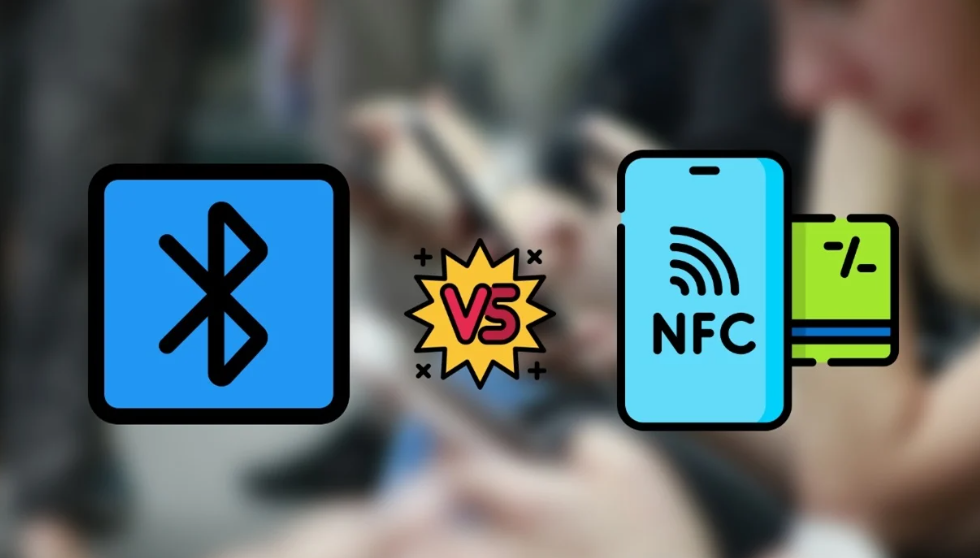
NFC vs Bluetooth: What’s the Difference?
NFC and Bluetooth fulfill distinct short-range goals: NFC targets near-field, rapid, and secure exchanges with minimal user interaction, while Bluetooth emphasizes range, continuous data streams, and longer connectivity. NFC enables quick pairing and offline authentication with strict proximity assumptions; Bluetooth supports persistent links and energy efficiency over time. Understanding their ground rules, use cases, and data rates helps prevent misapplication. The next considerations will clarify which technology to choose for specific scenarios.
What NFC, Bluetooth, and Bluetooth vs NFC: Quick Ground Rules
NFC and Bluetooth are two short-range wireless technologies with distinct design goals and operational profiles. The section codifies ground rules governing comparisons, emphasizing non-interference, security boundaries, and use-case clarity. It clarifies NFC basics versus Bluetooth myths, delineating proximity, pairing assumptions, and data rates. The prose remains analytical, enabling readers seeking freedom to evaluate constraints without overreach or vague assertions.
When to Reach for NFC: Tap, Pair, and Proximity Use Cases
When should NFC be selected in practice? The protocol favors quick, secure, and near-field exchanges. Tap to share enables instant data transfer or credential sharing with minimal user interaction, while proximity actions trigger context-aware prompts without pairing.
NFC supports fast keyboardless interactions, offline authentication, and simple device onboarding, making it ideal for contactless payments, tickets, and access control in constrained spaces.
When Bluetooth Wins: Range, Longevity, and Audio/Smart Home Scenarios
Bluetooth excels where range, endurance, and continuous data streams matter. In audio and smart-home contexts, stable links enable reliable playback, low-latency control, and persistent connections across rooms. Yet privacy tradeoffs arise from constant beacons and device discovery. Power efficiency remains a core strength, supporting long-term operation in battery-powered devices and sensors without frequent recharges, preserving functional independence and user autonomy.
How to Decide: A Practical 3-Step NFC vs Bluetooth Checklist
To determine the most suitable short-range wireless standard, a concise three-step checklist compares scope, power, and flow control between NFC and Bluetooth.
The evaluation emphasizes proximity use cases, quick pairing, and energy efficiency, guiding decisions for audio devices and other near-field applications.
Security considerations refine choices, ensuring robust protection without sacrificing usability or freedom in device integration.
Frequently Asked Questions
Can NFC Work Without a Power Source on Devices?
NFC can operate without a local power source on passive devices; it relies on passive power transfer from a reader. This enables battery efficiency, enabling daily use, though power is limited and device design dictates NFC power feasibility.
Is NFC Secure for Online Payments and Data Transfer?
NFC security is robust for payments and data transfer due to tokenization and proximity, though risk exists with malware or Bluetooth exposure on paired devices. Overall, sensible controls keep transactions safer than non-proximate alternatives.
Do Both Protocols Support Mobile App Pairing?
Both protocols support mobile app pairing, though via different mechanisms: NFC pairing uses close-range initiation and tap-to-pair for rapid, user-friendly setup, while Bluetooth pairing relies on discovery, bonding, and secure channel establishment. NFC pairing complements Bluetooth pairing.
Can Bluetooth Be Used Without Internet Access?
Bluetooth can operate without internet; it creates direct device-to-device links. This freedom enables local data exchange within Bluetooth range, independent of cloud access. NFC power is irrelevant here, as NFC requires close proximity, unlike Bluetooth reach.
Which Protocol Uses Less Battery in Everyday Use?
NFC energy efficiency surpasses Bluetooth power impact in short-range daily use. The protocol with lower ongoing drain is NFC, as Bluetooth maintains periodic scanning and connections, increasing energy consumption despite similar data transfer efficiency.
Conclusion
NFC and Bluetooth serve distinct operational envelopes: NFC excels at near-field, rapid, secure exchanges with minimal user interaction, while Bluetooth provides longer range, persistent connectivity and richer data streams. An interesting stat: NFC tap-to-share can complete in under 100 milliseconds, enabling seamless credential and ticket workflows offline. The conclusion: select NFC for quick, proximity-bound actions and authentication; reserve Bluetooth for ongoing, multi-mode connectivity, audio, and smart-home scenarios requiring stability and broader range. A practical decision hinges on proximity, data rate, and persistence needs.